Multiple AI models, one chat: what to look for
A useful multi-model workspace does more than put several model names in a menu. It helps you keep working when the task, the model or the available connection changes.
Read the guideThe most useful handoff is a short, explicit brief. It gives the next model the facts it needs without asking it to infer your entire project from a long conversation.
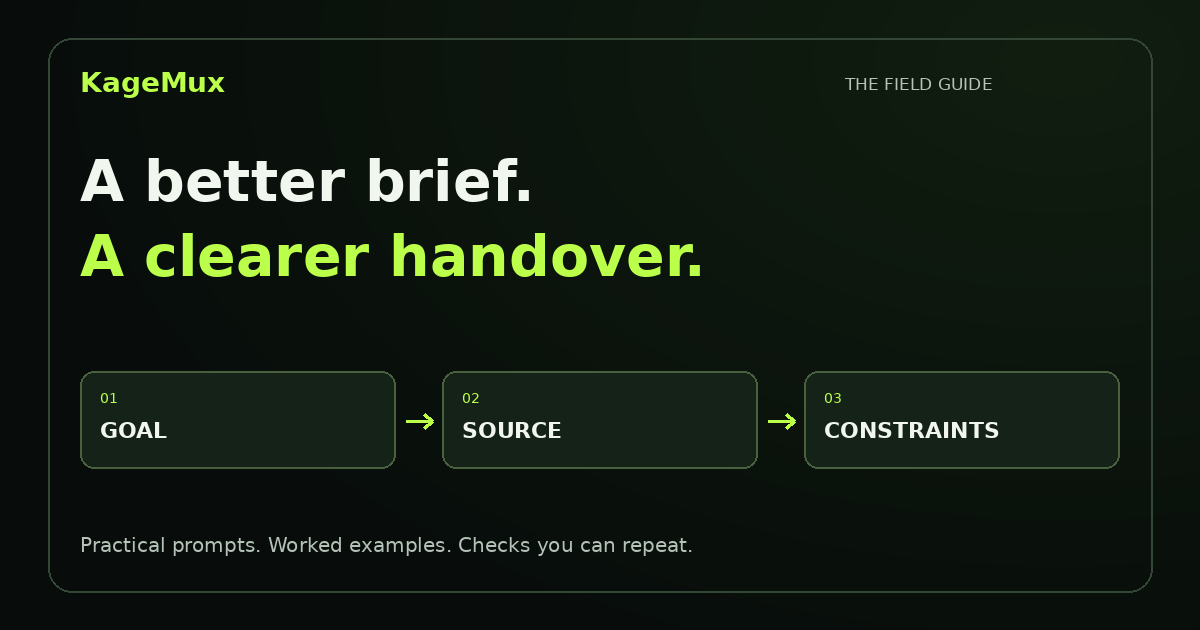
A chat often contains abandoned ideas beside approved decisions. If your brief does not distinguish them, the next model can revive a rejected direction. Label confirmed facts, the current decision and anything still unresolved.
For a website, that might mean: the brand is KageMux; the approved colors are dark and lime; the latest headline is final; and a payment integration is still being verified. A proposed feature should not appear in the brief as a shipped feature.
GOAL
What should this piece of work accomplish?

AUDIENCE
Who will use or read it?

CONFIRMED FACTS
Facts and source material that must stay accurate.

APPROVED DECISIONS
The current direction. Include what supersedes an older idea.

CONSTRAINTS
Length, tone, file format, deadline and other requirements.

DO NOT CHANGE
Names, figures, wording or behavior that must be preserved.

OPEN QUESTIONS
What is still unknown or awaiting a decision?

NEXT ACTION
One concrete task for the next reply.

CHECK BEFORE FINISHING
The criteria I will use to judge the result.
Copy the text into your own notes or the pinned project note in KageMux chat. Keep credentials and sensitive identifiers out of the brief unless the task truly needs them and you have checked the destination provider.
Suppose you are preparing an announcement for an evening workshop. The confirmed facts are the date, venue and maximum group size. The approved decision is a friendly, direct tone. The open question is whether refreshments are included. Your next action is a 150-word draft.
Write “Refreshments: not confirmed; do not mention them.” That is more useful than a vague instruction to be accurate. Ask the model to end with a short list of facts it still needs. The model can help structure the announcement while leaving the unresolved detail unresolved.
If it gets a fact wrong, correct the brief or provide the relevant source passage. Repeatedly asking it to “remember everything” is less reliable than supplying the exact information the current task needs.
It supplies concise context for the current work. It does not create an unlimited context window, authenticate a source or make a text-only model understand a file. Saved history remains useful for looking back, but the request sent to a model is finite.
In KageMux, a processing notice describes where messages and pinned notes go. Selected same-chat files accompany an explicit Send through the Qwen Vision route and stay active for follow-up messages until unchecked. Read the files guide before asking a new route to use an upload.
Keep the brief short enough that you can inspect it yourself. A handoff you cannot quickly verify may preserve the wrong thing very efficiently.
Ready to use the brief? Follow the AI writing workflow from source notes to a finished draft, then compare candidate answers with a consistent scorecard.